Gallatin Valley Sprinkler Blowout FAQs Before the Hard Freeze


Freeze season in the Gallatin Valley doesn't give much warning. One hard night is all it takes to crack a pipe, split a valve, or bust a backflow - and the worst part is you won't know about it until you fire the system back up in spring. That's exactly why we put this blowout guide together.
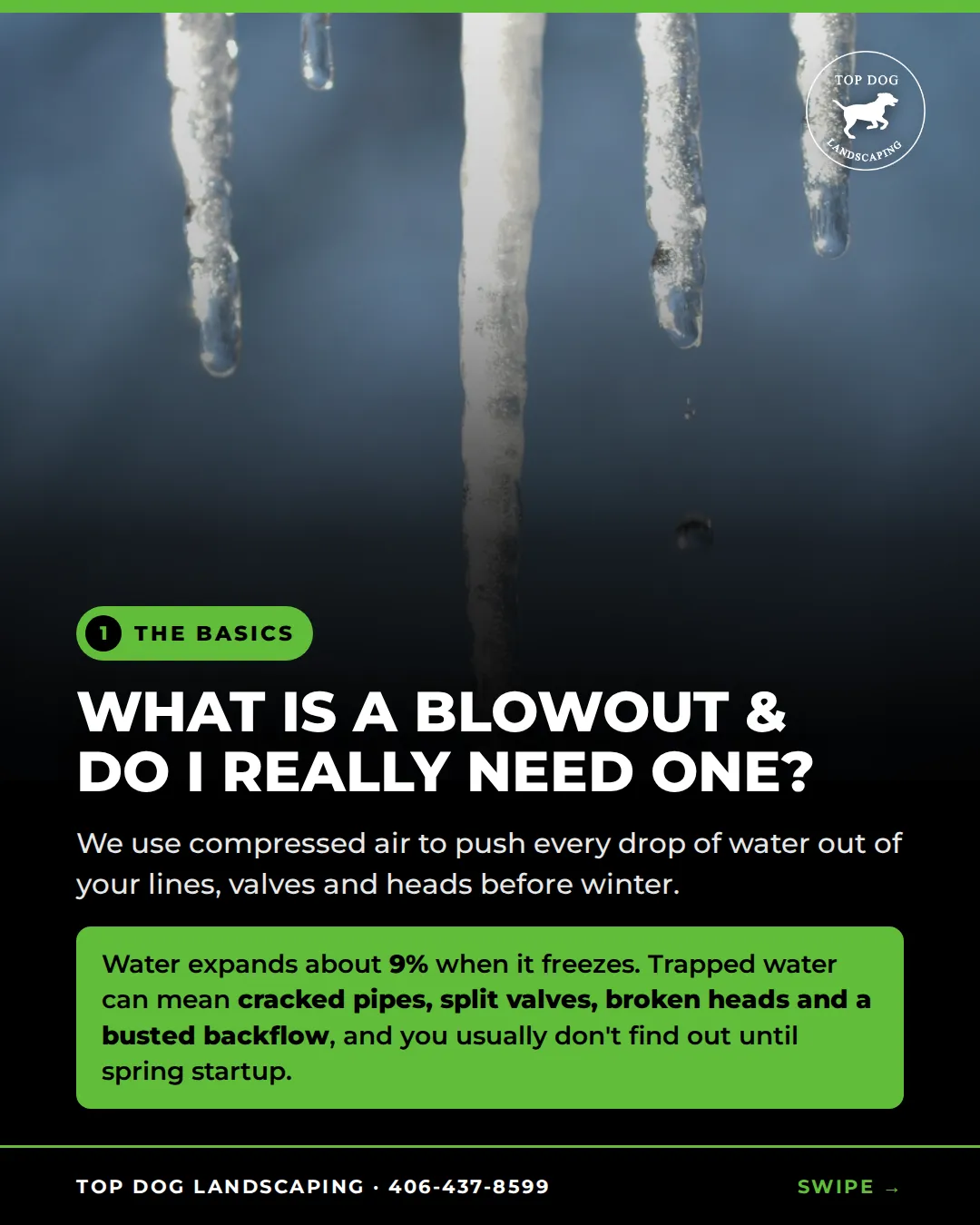
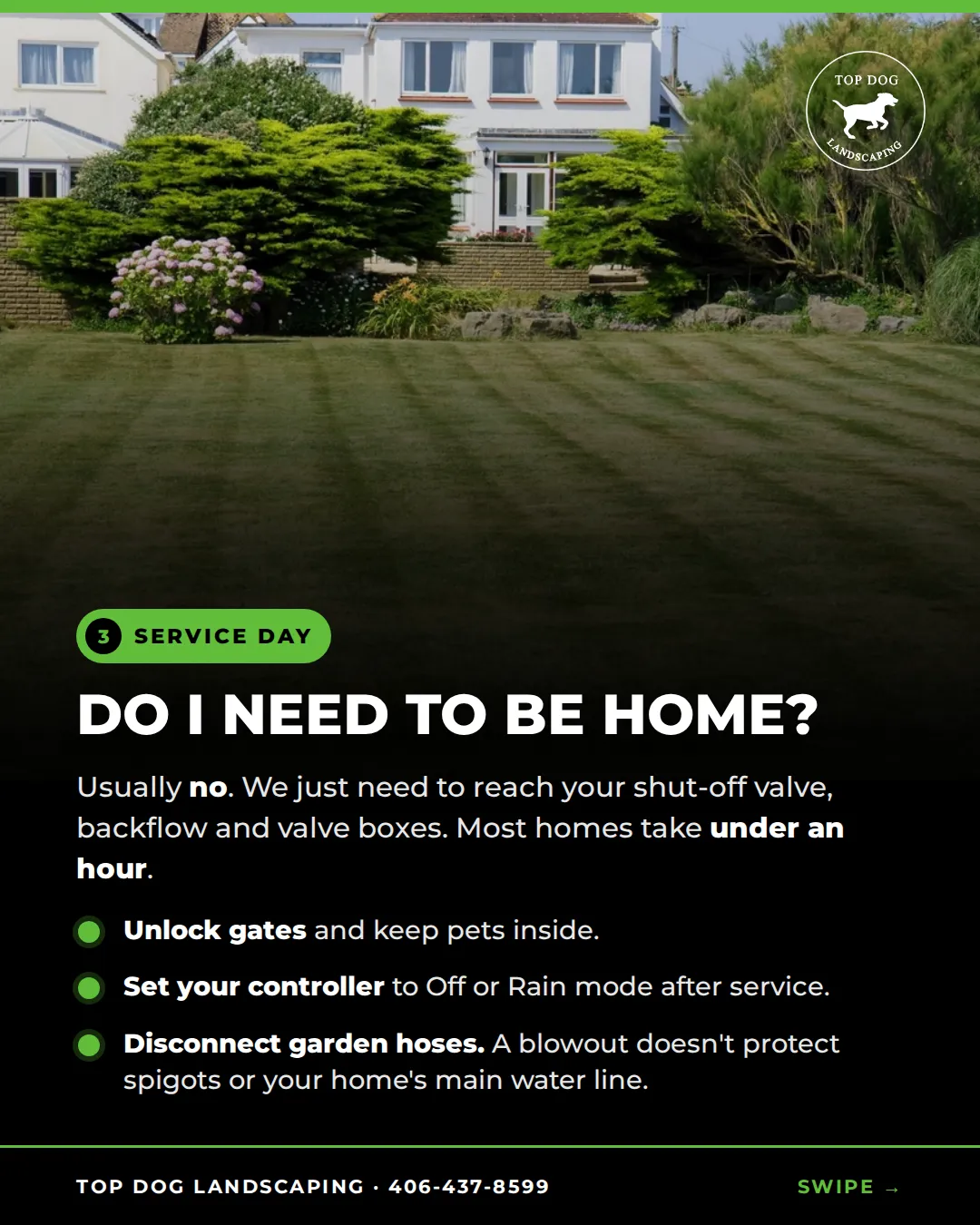
Here's the short version of how a blowout works. We connect a high-volume compressor to your system and push compressed air through every zone - clearing water out of the lines, valves, and heads before temperatures drop. Water expands about 9% when it freezes. Anything left sitting in a low spot or valve body is a problem waiting to happen. The process itself is straightforward, and most homes are done in under an hour. You don't even need to be there.
One of the most common questions we get is whether DIY is a real option. Technically yes - but it's one of those jobs where the margin for error is pretty thin. Too little air pressure and you leave water in the low spots where it freezes. Too much and you risk blowing out heads and fittings. We use high-volume compressors regulated to a safe pressure and work through every zone methodically. The cost of a professional blowout is a fraction of what spring repairs run.
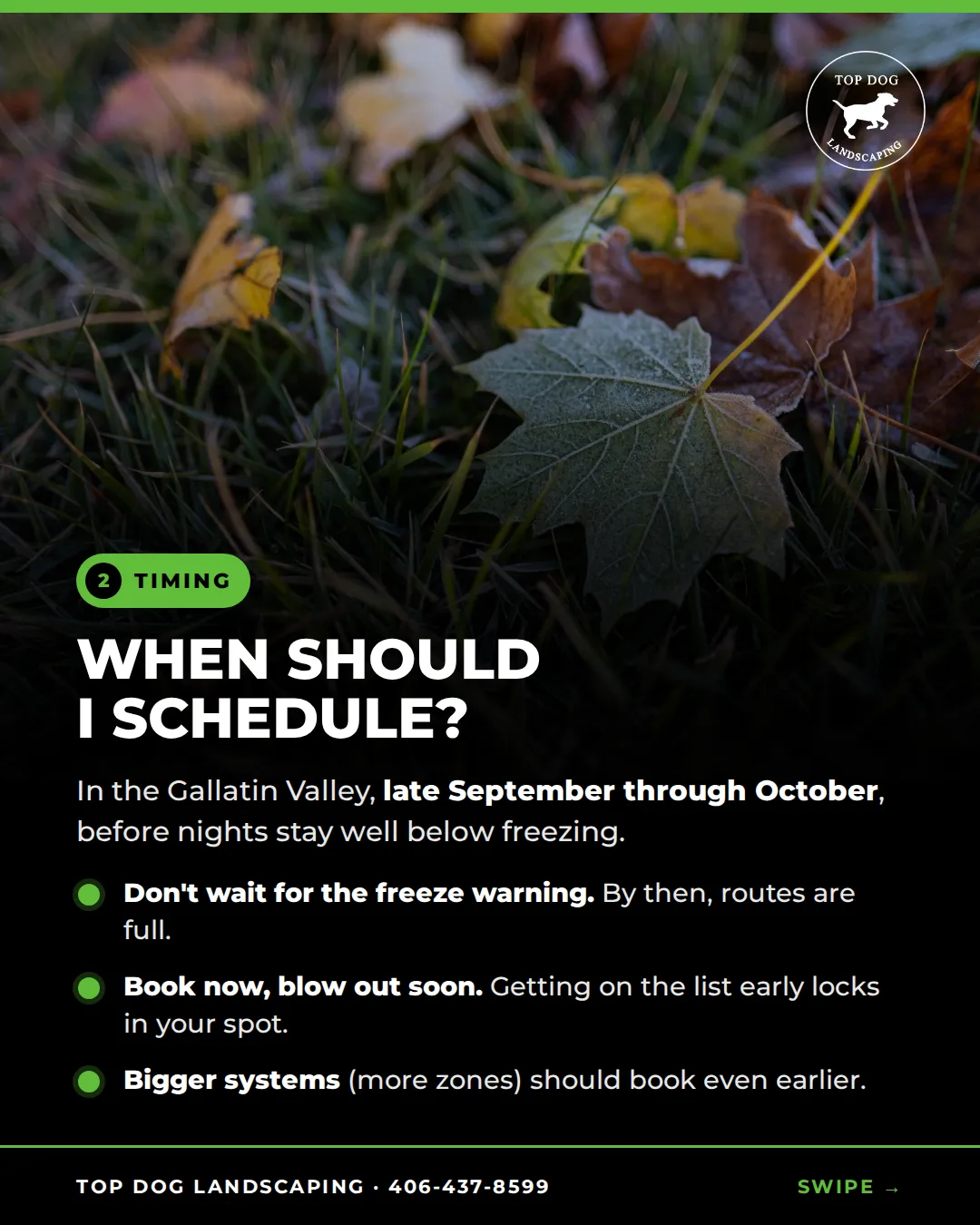
Timing matters too. In the Gallatin Valley, late September through October is the window you want to be working with - before nights stay consistently below freezing. Routes fill up fast once a freeze warning hits. Bigger systems with more zones should book even earlier. If a cold snap catches you before your blowout is done, shut off the water supply to the system, open any manual drains, and wrap or insulate the backflow device. Then get on the schedule.
We're currently running blowout routes across Belgrade, Bozeman, and the surrounding Gallatin Valley. If you've got questions about timing, what to expect on service day, or whether your system needs anything beyond a standard winterization, we're happy to talk it through.